ABC Powder (Minimax+) Type
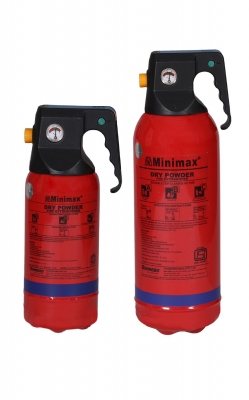


| Specifications | 1 kg | 2 kg |
| Fire Rating - MAP 90 | 1A 34B | 2A 55B |
| Working Temperature °C | -30 °C to +60 °C | |
| Burst Pressure | 55/80 bar min., 110 bar (actual) approx | |
| Cylinder Testing Pressure | 35 bar for 30 sec. | |
| Operating Pressure | 15 bar | |
| Min. Effective Discharge Time | 9 sec. | 13 sec. |
| Propellant | Dry Nitrogen | |
| Charge | ABC Dry Powder (MAP90) | |
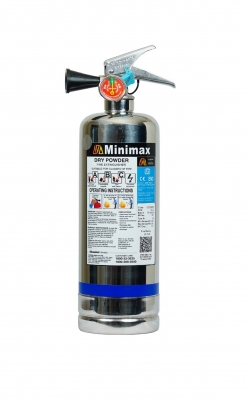
Minimax+ fire extinguishers are sleek and compact design models in ABC portable stored pressure type. These extinguishers are designed to match the aesthetics of premises besides protecting them from fire hazard. ABC dry chemical powder is suitable for use on Class A (ordinary solids), Class B fires (flammable liquids) and Class C fires (flammable gases). These extinguishers can also be used on electrically actuated fires. Dry powder fire extinguishers carry a blue colour band which is clear and easy to see in the event of any emergency.
These fire extinguishers filled with silicon coated mono ammonium phosphate dry chemical powder is available with MAP 90% ABC powder with 1 & 2 Kg capacities.
Look For More
FAQ's
Fire extinguishers should be located throughout the workplace and readily accessible to the employees without subjecting them to possible injury. Selection and installation vary site to site and hazard to hazard. General Placement distance as per the class of fire as per IS 2190 is mentioned below;
- Class A, B and C Fire Hazard – Fire Extinguisher within 15 m travel distance.
- Class D, F and Special Fire Hazard – Fire extinguisher within 10 m travel distance.
The knowledge of operating fire safety equipment and how to act during a fire emergency is of utmost importance as it equips the employees with the knowledge and skills to about the fire emergency procedures. Fire safety training shall be carried out every 12 months. In some critical circumstances, organization shall provide additional training. Factors that may prompt this include: An incident occurs in your industry/workplace, which impacts on your business and safety procedures.
Preparation is the key to an effective response to workplace fires. Fire drills are ways to prepare for exiting a building or performing emergency procedures during a fire emergency. Fire drills help prepare employees to respond quickly, calmly, and safely. Fire & emergency drills shall be conducted, in accordance with the Fire Safety Plan, at least once every six months.
Flammable liquids, solvents and gases, waste products, combustible materials, Oxidising chemicals, Pyrotechnics, Sparks, Hot work, Extractor fans, Conventional heat sources like HVAC and radiators, Frictional heat and static from machinery, electrical hazards due to exposed wires, overloaded circuits, static discharge and extension cords, faulty electrical equipment and machinery, activities such as welding and grinding, and anything that involves molten metals, etc. are an identified fire risks in an industrial environment.
Flammable liquids, solvents and gas storage, combustible material waste, Uncovered or unprotected fuel, electrical circuits, heating equipment, and smoking materials can also cause fires. Fire potential is less for Warehouse when compared to the industry. But when a fire incident occurs happens it is on a massive scale.
While you might think that your office is free from combustibles because there are no oils, gases or open flames, there are still risks present in any commercial building. Paper, wooden furniture, plastics, tissues, cleaning liquids, and even dust can catch fire. Electrical hazards such as exposed wires, overloaded circuits, extension cords, faulty electrical equipment and unprotected combustible materials are the primary risks for a fire breakout in offices.
Fire safety standards generally focus on minimizing the reaction to fire of products and materials used in different living environments such as domestic dwellings, household equipment, furnishings and electronics, buildings and different transport modes. Globally, most fire safety regulations have policies and procedures in effectively storing, managing, and disposing of fire initiating materials or activities. Different fire standards such as NFPA, NBC, BIS etc. are followed by the organizations for fire safety compliance.
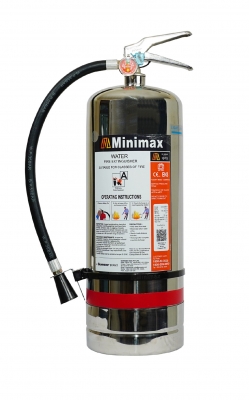
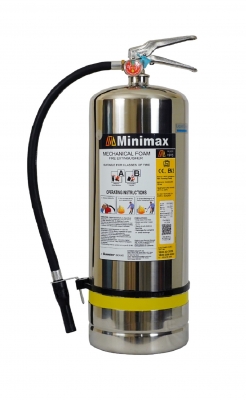
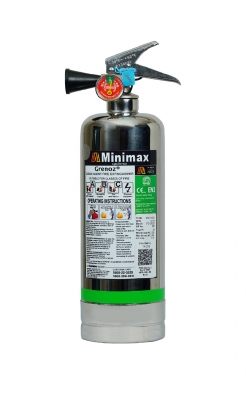
BIS (Bureau of Indian Standards) has a guideline mentioning a small band of distinguishing color shall be prominently visible on the surface area of fire extinguishers. As you are aware that different types of extinguisher are suitable for specific classes of fire, band colour identifies the type of fire extinguisher and its suitability on different classes of fire.
The most feasible fire safety equipment required to have are fire extinguishers. The fire extinguisher equipment should be easily identifiable, highly visible, easily accessible, adequately charged, and regularly inspected. They should be placed high on wall surfaces and positioned near to the closest exit.
A fire risk assessment is a review undertaken of a building, office premises, or commercial complex in order to assess its fire risk and offer recommendations to make the building safer. It is a legal requirement. Any structure where people are dwelling as part of a commercial activity must have this done. The risk assessment is done by a fire safety authority from local fire service department with fire safety education, training and experience.
A qualified fire authority inspects a premise as part of a periodic fire risk assessment. The enforcement officer evaluates the fire standard compliance at the workplace and identifies the potential areas of improvement. The evaluations also reinforce the policies to ensure that no fire accident happens. The inspection verifies the efficiency of the existing fire prevention measures.